


Recently, I completed the necessary coursework for a Master’s in Business Administration. The diploma will presumably be mailed to me, but I haven’t checked.
Contrary to the clickbait title, I got exactly what I asked for: the “MBA Brain.”
An Aside: The Engineering Brain
I got my Bachelor’s degree in Electrical Engineering. Disuse has leached much of the material from my brain, particularly the underlying mathematics and physics. What remains is a mode of thinking I have described as the “Engineering Brain.” I’ve described this to interlocutors as two core lessons:
Lesson One: Significant Figures
In most engineering classes, 90 equals 100 equals 110. If a linear model introduces less than 10% variance versus the nonlinear model, use the linear model. To the extent that engineers employ complex mathematics, we do so to bypass yet more complex computation.
This is the principle between phasors—yes, it involves imaginary numbers, but it delivers us from staring sinusoidal functions in the face. Similarly, slide rules employ logarithms to convert multiplications into additions. Engineers of a prior age also relied on massive books of lookup tables: prix fixe calculations that we could convert into envelope math.
If it need more advanced calculation, we have computers for that. Formerly, this was a human’s job, as seen in the movie Hidden Figures (2016). Now, we have machines for that work.
Lesson Two: Systems Analysis
Particularly, modeling complicated things as black boxes made of black boxes. A black box is a thing where you don’t know (or don’t care about) its internal workings—all you have is a relation of inputs and outputs, commonly summarized in a spec sheet. Notionally, if you understand the spec sheets of a collection of components and connect them appropriately, then you can fully understand the behavior of your larger system.
Of course, the spec sheets only apply to a defined set of conditions. And if when your final system diverges from expectations, you can crack open one of your black box components and find that it, too, is made out of black boxes with their own spec sheets and divergent behaviors.
Within a computer, this principle can take you down to electron levels within a P-N junction, or up to a virtual machine operating on a compute cloud.
Leaving Room For Noise
Taken together, significant figures and systems analysis constitute an approach for understanding things that are simply too large to fit into a human brain: arithmetic logic units, mixture-of-experts language models, electric transmission networks, even human souls if you get the model right.
The approach works because real life is suffused with noise: current transients, dropped tokens, electrocuted squirrels, the fact of free will. A perfect model will never account for all noise, and thus a perfect model is a fool’s errand. Linearize the nonlinear, stick safety factors on your spec sheets, because your mental shortcuts won’t damage your designs more than reality.
This mode of thinking, this “Engineering Brain,” is my primary prize from my undergraduate education. And I started my part-time, asynchronous, online MBA program in 2023 seeking a new mode of thinking.
I got what I paid for.
I have an MBA Brain, too.
Lesson Alpha: The Time Value of Money
The most important (and counterintuitive) lesson of the MBA Brain is that a dollar isn’t really a dollar. There many kinds of money, and the value of each kind of money changes in divergent ways.
The most basic kind of money is cash: a US Dollar is a better store of value than a Bitcoin because I can go to a Starbucks, hand over five dollars, and leave with a latte. But in twenty years, that five dollar bill will buy me a lot less than a latte, because the value of that paper bill falls over time. This is inflation.
A briefcase of cash is a great way to transfer money, but it’s a terrible way to store money, because the value of that briefcase falls over time. This is—to defend the central banks—a good thing, actually. A baseline level of inflation incentivizes people and businesses not to hoard money in briefcases and mattresses, in favor of investing that money into something that appreciates in nominal currency value. That rate of appreciation is your rate of return.
You set your target rate of return for a given investment based on some baseline: the inflation rate, the “risk free” Federal Funds Rate, the interest rate on a savings account. The higher your target rate of return, the more you must pay, either in risk or in alpha, the finance-bro shorthand for privileged, advance, or otherwise non-obvious access or information. If you could have high returns without risk or alpha, then everyone else would have done it too, and now that investment is the new baseline.
So if a briefcase of cash is a bad way to store money, everything else with a rate of return (positive or negative) is also a way to store money: an asset. The easier and faster it is to convert into a briefcase of cash, the more liquid it is.
So far, so basic. But this concept of time-value is a Eldritch concept that destabilizes one’s conception of money, because it implies the value of an asset necessarily is relative and time-dependent. To assess the worth of anything, you must pick a baseline and a window of time. Maybe that baseline is the US Dollar, indexed at the year 2000. Maybe it’s the McDonald’s Big Mac. Maybe it’s Brent Crude, a fundamentally volatile financial fiction named after a type of oil that has not been extracted since 2021.
But it’s never just a dollar.
Lesson Beta: Strategy, Operations, and Tactics
Multiple disciplines of business, from HR to marketing to business organization, frame their concepts in the tripartite taxonomy of strategy, operations, and tactics. These terms, like “wealth” and “love,” are treated as obvious and universal concepts even though everyone uses them differently. Here are my definitions.
Tactics: The specialized knowledge and practices for doing something of value: engineering, construction, information-gathering, making, doing. This is ground-level. This is hourly work, weekly task lists, and monthly data logging. This is what most people do for their paychecks, but it is not the domain of management. An MBA assumes you’re familiar with tactical work, or else assumes you can figure it out at your consulting gig, or else allows you to be detached from the reality of how specific kinds of value are created.
Operations: The process for organizing, tracking, and accelerating the tactical work that creates fundamental value: logistics, procurement, management, payroll, “Do you have what you need to do your job?” This is 10,000-foot work. This is monthly data aggregation, quarterly metrics, annual reporting. This is the work of middle management and the domain of Commoncog management guides, and it requires people who understand the tactical work but refrain from meddling. An MBA should teach you this work, because a good manager can transform a struggling team towards immense success, and a bad manager can destroy what should be a rockstar cohort.
Strategy: The long-view frameworks for deciding what an organization should do, how and why it should do it, and what it should not do: forecasts, narratives, tradeoffs, “This is who we are and why you should give us money.” This is 30,000-foot work. This is annual reviews, five-year plans, generational legacy. This is the what senior managers must do and what investors must assess. These people make a lot of money because the stakes for being right (or wrong) is millions, if not billions of dollars. It requires wide knowledge, deep understanding, and underlying courage alchemized into minor clairvoyance.
These three levels of business interlink and overlap, but they involve different verbs, different skillsets. And they build on each other—operational work without tactical understanding returns mismanagement. Strategic work without operational and tactical understanding returns empty suits carrying glitzy slide decks that don’t make money. And conflating these levels returns weak performance at best and financial disaster at worst.
The Diploma Means Nothing
None of what I learned corresponds to the grades I have received in my MBA program. Between grade inflation and the proliferation of AI tools, the signaling value of a diploma and transcript has fallen to near-zero. My coursework—discussion board posts, multiple-choice exams, simple case studies—can easily be completed with large language models with reinforcement learning and web search. In fact, many of those qualitative assessments are so prescriptive that they disincentivize thinking. Some professors have docked points for bypassing prescriptive structures in favor of more nuanced analysis—but none of them have penalized Turing Test-failing slop.
None of my courses have required serious work either—neither difficult assignments nor heavy reading. I track my time for each course, and I’ve averaged 3-5 hours per week per course. This is presumably on the low end compared to my cohort, but the modal MBA student in my program has a job and children, so I suspect that a more challenging per-course workload would have motivated rebellion.
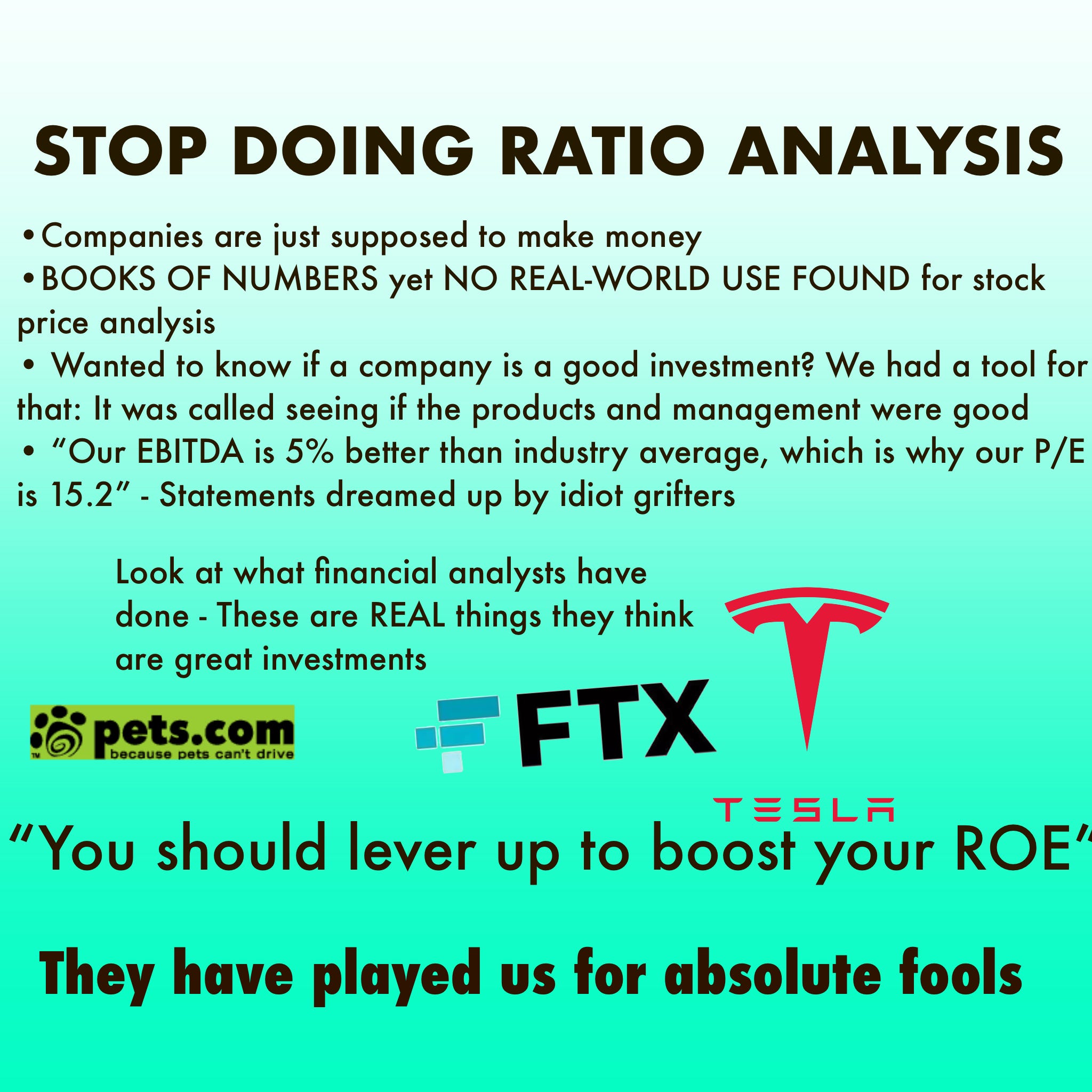
And much of the materials—particularly in the HR and finance classes—were actively outdated. Stock and bond pricing formulas explain very little in the hype-driven investment markets of the 2020s, in which the companies of today hype EBIDTA numbers to hide poor net profits and the companies of tomorrow apparently court private financing to sidestep the noise. Meanwhile, the HR courses straightforwardly taught the equity-minded “woke” approach so maligned in the 2020s, with no attempts to defend against critiques from the right or the left.
For these reasons, the nominal value of my MBA is functionally worthless. If you want to learn operational management principles, the Commoncog Starter Manager Guide will explain more information more clearly than any coursework. If you want to learn what money really is, take (or audit) an introductory accounting course—any will do. If you want to learn strategy, start by peppering notionally smart people with “why do you believe that” questions until they start stammering. Learn how many of these “smart” people are in fact full of shit. Seek mentorship from someone who isn’t—if you have lobbed enough challenging questions to make them dance, you have likely already earned their respect.
The most important lessons that an MBA cannot teach you are courage and discretion. Without the courage to enforce rules and the discretion to bypass them, your operational principles become feckless bureaucracy. Without the discretion to differentiate alpha from bullshit and the courage to take risk, your strategic knowledge will fail to generate returns on investment.
This writing reflects my views alone, and does not reflect the views of my current employer or previous employers. This is not investment advice.
Two Questions, one specific, one abstract:
1. How do you feel about your decision to pursue an online part time MBA vs a 2 year full time MBA?
2. After completing the degree do you feel like "Business" (Marketing, Accounting, Finance, etc.) are worth serious study and if so do you think they are under studied or trivialized?
1. The different forms of money is a nice angle to characterize how value comes about. Different layers of abstraction on top of cold hard cash.
2. I was always under the impression that MBAs need to be in person to generate max value in the form of professional networks. (Alas I tried)
3. Good old EE... I remember that the time domain and the frequency domain are interchangeable but the relational operations are kind of inverse or something... oh and Fick's Law.